

product shot to come
Polesaver Rods
The utility-grade diffusion rod. Drilled into a standing pole at the groundline, Polesaver rods dissolve slowly into the wet heartwood and stop decay from the inside — for years, on an inspection cycle.
- Drill, insert, plug
- Groundline heart rot
- Standing poles
- Boron + fluoride
- Top up on the inspection cycle
- Not a termite treatment
Where to get it
Find a stockist Australian made in Cheltenham, Victoria — since 1988
Not sure it's the right product?
Compare all preservatives → ·
03 9532 0679
Directions for use
Preparing the timber, then applying — as per the approved label
Before you start: if the timber is structural or load-bearing — veranda posts, bearers, joists, rafters — get a qualified professional to decide whether it can be treated or needs replacing. Preservative stops decay spreading; it can't restore lost strength.
Before you drill
- DIG Expose the groundline Excavate around the pole to below the groundline so the wet zone is visible and the holes can be angled down into it.
- CHECK Check for internal decay Sound, drill or bore to establish the extent of centre rot. Polesaver rods are best used on poles showing evidence of internal decay.
- BAND External decay too? Over 5 mm of external decay calls for a Bioguard bandage as well. Key or difficult-to-replace poles should get both.
Incremental treatmentAn approved alternative — one hole treated per inspection cycle, with full coverage only once every hole is in.Tap for more
Installing the rods
Always read the label before use.
- DRILL Drill three abaxial holes at the groundline 14 mm rods: 16 mm holes. In poles up to 950 mm circumference, drill three equally spaced abaxial holes at about 20° to the vertical, each starting about 150 mm above groundline and extending to approximately 300 mm below it (total length 420–450 mm). Drill four holes in poles over 950 mm circumference.
- DROP Insert the rods Insert three Polesaver rods into each hole. (10 mm rods: 10 mm holes to 230 mm below groundline in poles up to 200 mm diameter, two rods per hole.)
- PLUG Plug flush Screw a tapered plastic plug into each hole, flush to the pole surface.
- RING Alternative — four holes in the annulus To treat the annulus rather than the centre: with a 16 mm bit, drill four holes 100 mm above groundline, 90° apart, at 20° to the vertical and 45° to the tangent of the pole. Insert two rods into each hole and plug.
How many rods
By rod size and pole size.
| Rod | Pole | Holes | Rods per hole |
|---|---|---|---|
| 14 mm × 125 mm (PS14) | Up to 950 mm circumference | 3 | 3 |
| 14 mm × 125 mm (PS14) | Over 950 mm circumference | 4 | 3 |
| 14 mm × 125 mm (PS14) | Annulus method, any pole | 4 | 2 |
| 10 mm × 100 mm (PS10) | Up to 200 mm diameter | 3 | 2 |
To sterilise a 16 mm inspection hole, insert 14 mm rods and plug; a 12 mm inspection hole takes a single 10 mm rod.
Termites can bypass itNot a treatment for an existing infestation — a termiticide only in the treated zone.Tap for more
POISON · As per the approved label
Safety & hazards
Signal word, restraints and first aid — from the approved label
As per the approved label. Always read the label before use.
Harmful if swallowed; causes skin and serious eye irritation. Wear protective gloves and clothing; wash hands thoroughly after handling.
Avoid contact with skin and eyes. Use impervious (synthetic rubber / PVC) gloves when handling. Do not eat, drink or smoke when using this product. Wash hands thoroughly after handling. Under normal use the rods do not generate dust; if crushed, wear a P2 dust mask and work in a ventilated area.
- To be used as a wood preservative only.
First aid
If poisoning occurs, contact a doctor or Poisons Information Centre (13 11 26). If swallowed, do NOT induce vomiting — rinse mouth, give a glass of water to drink and seek immediate medical advice. If in eyes, hold eyelids apart and flush with running water for at least 15 minutes and transport to a doctor or hospital. If on skin, remove contaminated clothing and flush with running water.
Full safety directions and first aid are on the product label and the Safety Data Sheet.
Handling & environment
Preschem handling guidance — general advice, not label text. The approved label and the Safety Data Sheet take precedence.
Environment
Avoid contaminating waterways. The product is water-soluble and leachable through normal soil; boric acid and fluoride do not biomagnify through the food chain.
Disposal
Dispose of packaging at an approved disposal site. Refer to the State or Territory land-waste management authority.
Where it goes
The groundline zone of poles in service
For the remedial treatment of heart rot in standing poles, and for other structural timber subject to the ingress of water. Holes start above the groundline and run down into the zone that fails first.
Treats the pole from the centre out
Why it works
Heart rot starts in the wet core of a pole just below the groundline — the one place no surface treatment reaches. The rods sit in that zone and release into the moisture that drives the decay.
Dissolves where it's wet
In the presence of moisture inside the timber the rods slowly dissolve, releasing boron and fluoride that diffuse into the wood, kill active decay and protect the sound wood from further attack.
A heavy loading
The rods can deliver up to 1.3 kg/m³ of elemental boron and 1.2 kg/m³ of fluorine in the treated zone — more than adequate to inhibit most decay fungi and insects.
Built for the inspection cycle
Actives deplete over time, so rods are topped up into the existing holes on a cyclic basis. The inspection cycles Australian utilities already run typically meet this.
Technical data
Specifications
Active constituents
Protects against
Rate, coverage & reapplication
Pack sizes
Poison schedule
Storage & shelf life
Common questions
How long does a treatment last?
Will they stop termites?
Polesaver rods or a Bioguard bandage?
I have a pole home — can I use these on my posts?
What's the difference from No-Rot Rods?
You might also need
BioGuard Bandage
The partner treatment for external decay on the same pole — wrapped at the groundline.
View product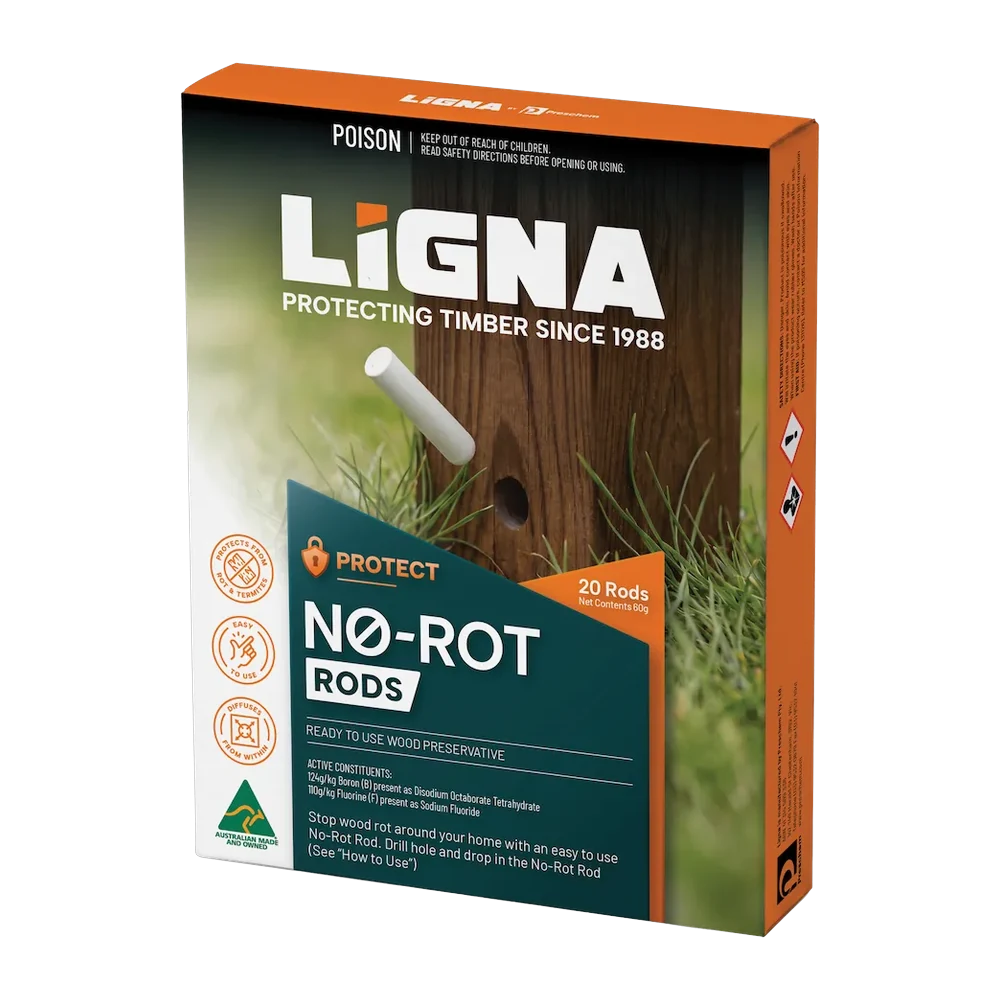
No-Rot Rods
The same diffusion chemistry in an 8 mm rod — for anything under 200 mm: window joints, post ends, rails and pergolas.
View product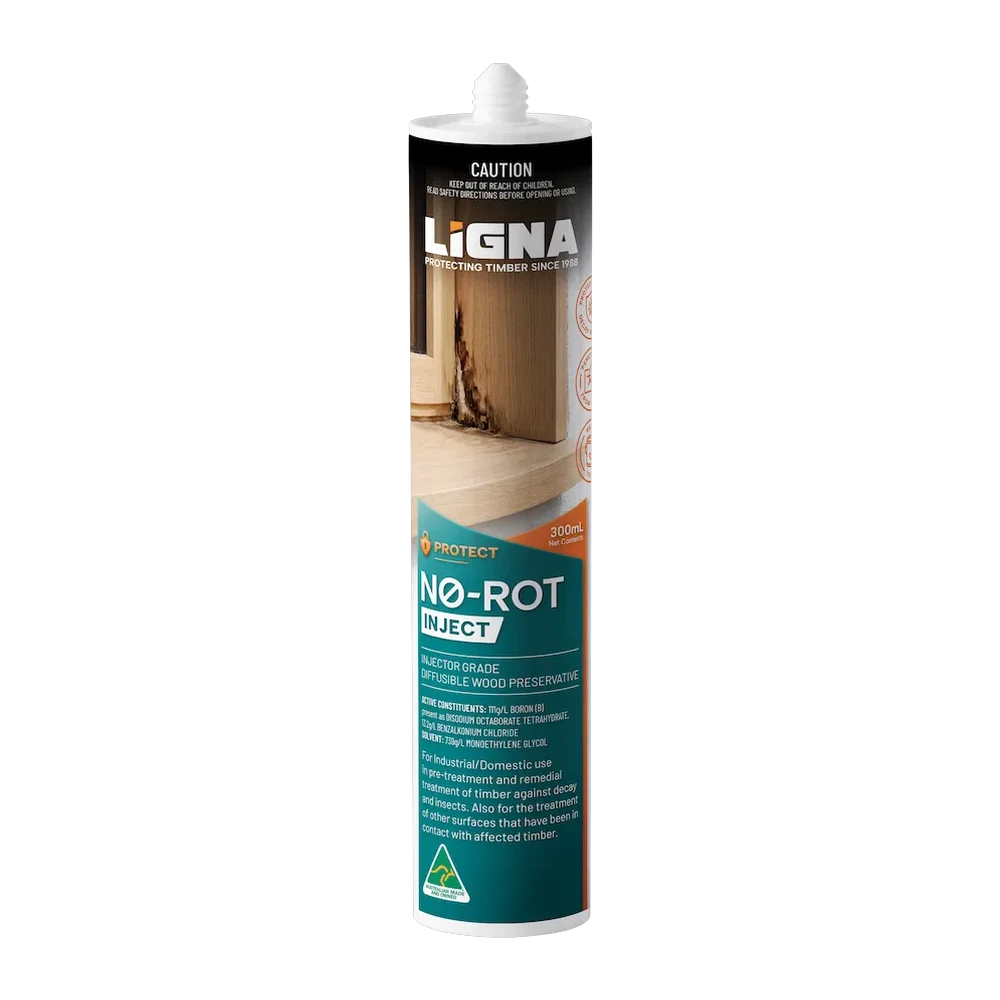
No-Rot Inject
Injectable No-Rot for structural timber you can't reach — bearers, studs, joinery.
View productAustralian made in Cheltenham, Victoria since 1988 — founded by two CSIRO timber scientists. The whole story →