

product shot to come
BioGuard Bandage
The groundline bandage for poles in service. Preservative discs in a polyethylene wrap, fitted just below the soil line, that stop external decay from the outside in.
- Wrap at the groundline
- External decay
- Boron + fluoride
- Replace every 3–5 years
- Keep it below groundline
Where to get it
Find a stockist Australian made in Cheltenham, Victoria — since 1988
Not sure it's the right product?
Compare all preservatives → ·
03 9532 0679
Directions for use
Preparing the timber, then applying — as per the approved label
Before you start: if the timber is structural or load-bearing — veranda posts, bearers, joists, rafters — get a qualified professional to decide whether it can be treated or needs replacing. Preservative stops decay spreading; it can't restore lost strength.
Before you wrap
- CHECK Internal decay too? Bioguard treats the outside. Centre rot calls for Polesaver rods as well — key or difficult-to-replace poles should get both.
- MEASURE Measure below groundline The circumference at the widest point below groundline sets the cut length — allow a 25–50 mm overlap.
- WIRE Find the services Earth wires and underground services stay outside the wrap. The bandage butts up to them so it always touches the pole.
Fitting the bandage
Always read the label before use.
- DIG Excavate to 300 mm Excavate the soil around the pole to a depth of 300 mm and clean excess soil off the pole. Soft, rotted or decayed timber need not be cut off, though removing decay that makes the surface irregular helps.
- CUT Measure, cut, staple the top Measure the circumference at the widest point below groundline. Cut the Bioguard to allow a 25–50 mm overlap. Staple the top edge of one end to the pole so the top of the bandage is immediately below true groundline.
- WRAP Wrap tightly and staple Wrap the polyethylene bandage tightly around the pole (it will stretch) and staple the leading top and bottom edges in place. In wet areas or poorly drained soil, seal the bottom edge with PVC tape as well.
- BUTT Butt up to obstructions Never go around earth wires or underground services — butt up to them so the bandage always contacts the pole. Where sapwood overhangs near the groundline, fit the bandage underneath the overhang; do not run it up and over an outward step or taper.
- TAPE Seal the top edge Wrap the specified PVC tape tightly around the top edge to seal it and reduce water ingress into the bandage.
- FILL Backfill and compact Backfill half the soil, compacting firmly without damaging the bandage, then fill the rest and compact it so the soil slopes away from the pole. The top of the black sealing tape should be just visible above groundline after the soil settles.
POISON · As per the approved label
Safety & hazards
Signal word, restraints and first aid — from the approved label
As per the approved label. Always read the label before use.
Harmful if swallowed; causes skin and serious eye irritation. Wear protective gloves and clothing; wash hands thoroughly after handling.
Avoid contact with skin and eyes. Use impervious (synthetic rubber / PVC) gloves when handling. Do not eat, drink or smoke when using this product. Wash hands thoroughly after handling. The material is non-flammable.
- For use as a wood preservative only.
First aid
If poisoning occurs, contact a doctor or Poisons Information Centre (13 11 26). If swallowed, do NOT induce vomiting — rinse mouth, give a glass of water to drink and seek immediate medical advice. If in eyes, hold eyelids apart and flush with running water for at least 15 minutes and transport to a doctor or hospital. If on skin, remove contaminated clothing and flush with running water.
Full safety directions and first aid are on the product label and the Safety Data Sheet.
Handling & environment
Preschem handling guidance — general advice, not label text. The approved label and the Safety Data Sheet take precedence.
Environment
Avoid contaminating waterways. The product is water-soluble and leachable through normal soil; boric acid and fluoride do not biomagnify through the food chain.
Disposal
Dispose of packaging at an approved disposal site. Refer to the State or Territory land-waste management authority.
Where it goes
The groundline shell of poles in service
For the remedial treatment of external decay — brown rot, white rot and soft rot — in the exterior groundline region of standing wooden poles.
Treats the pole from the outside in
Why it works
Soft rot and surface decay start in the wet outer shell of a pole just below the groundline — the zone Polesaver rods, working from the centre, reach last. Bioguard sits against that shell and releases into it.
Dissolves where it's wet
In the presence of moisture the solid preservative tablet in each blister slowly dissolves, releasing boron and fluoride that diffuse into the timber, kill decay fungi and protect against further attack.
A heavy loading
Capable of delivering up to 2 kg/m³ of both elemental fluorine and boron throughout the groundline region of the pole.
The critical shell, inside a year
Within 12 months of installation the critical outer 30 mm shell at the groundline has enough preservative to sterilise and protect it. Designed for replacement every 3–5 years.
Technical data
Specifications
Active constituents
Protects against
Rate, coverage & reapplication
Pack sizes
Poison schedule
Storage & shelf life
Common questions
Bioguard or Polesaver rods?
How long does a bandage last?
Do I have to cut away the rotten wood first?
Why must the top sit below groundline?
You might also need
Polesaver Rods
The partner treatment for centre rot on the same pole — drilled at the groundline.
View product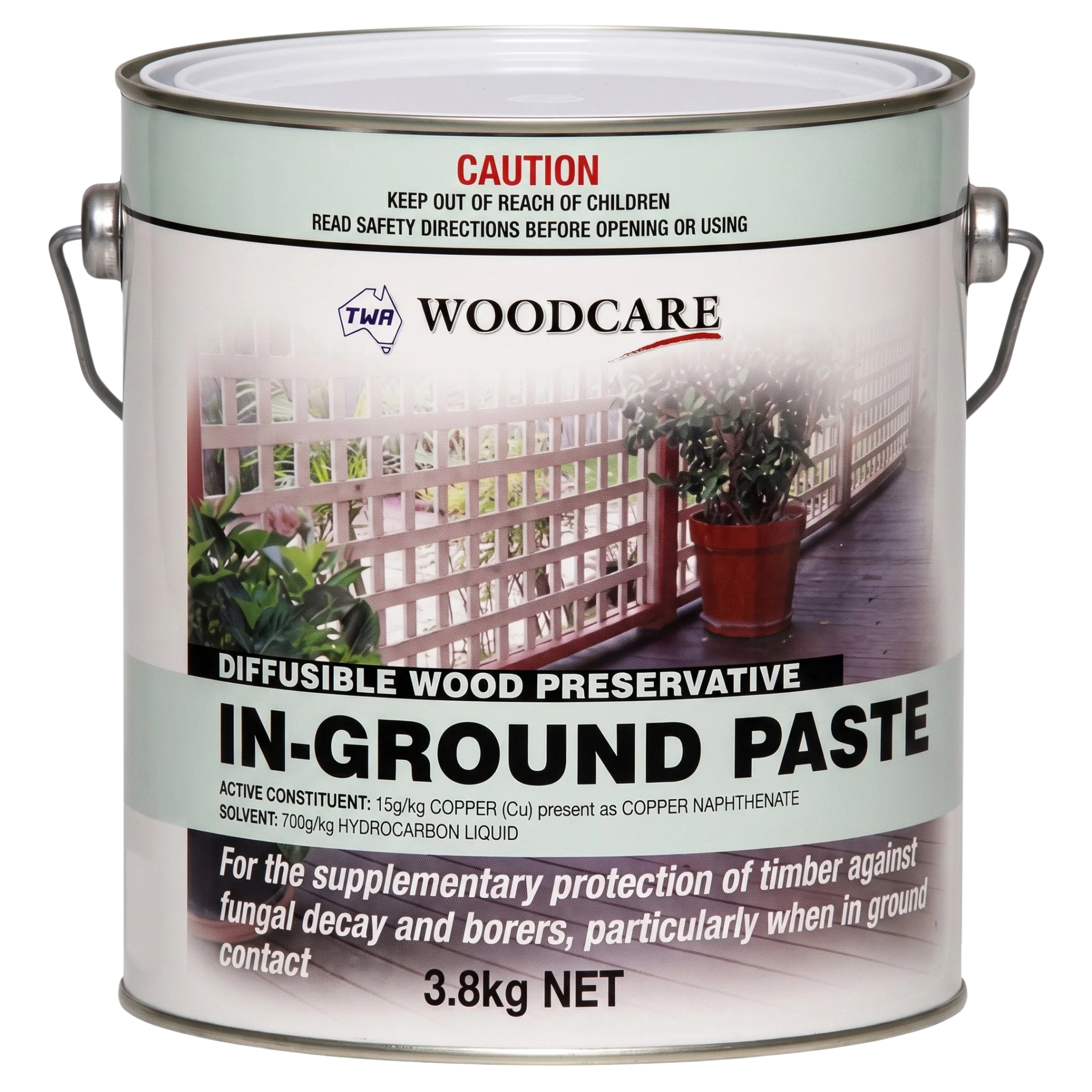
In-Ground Paste
For posts and stumps at the groundline — the brush-on paste rather than a bandage.
View product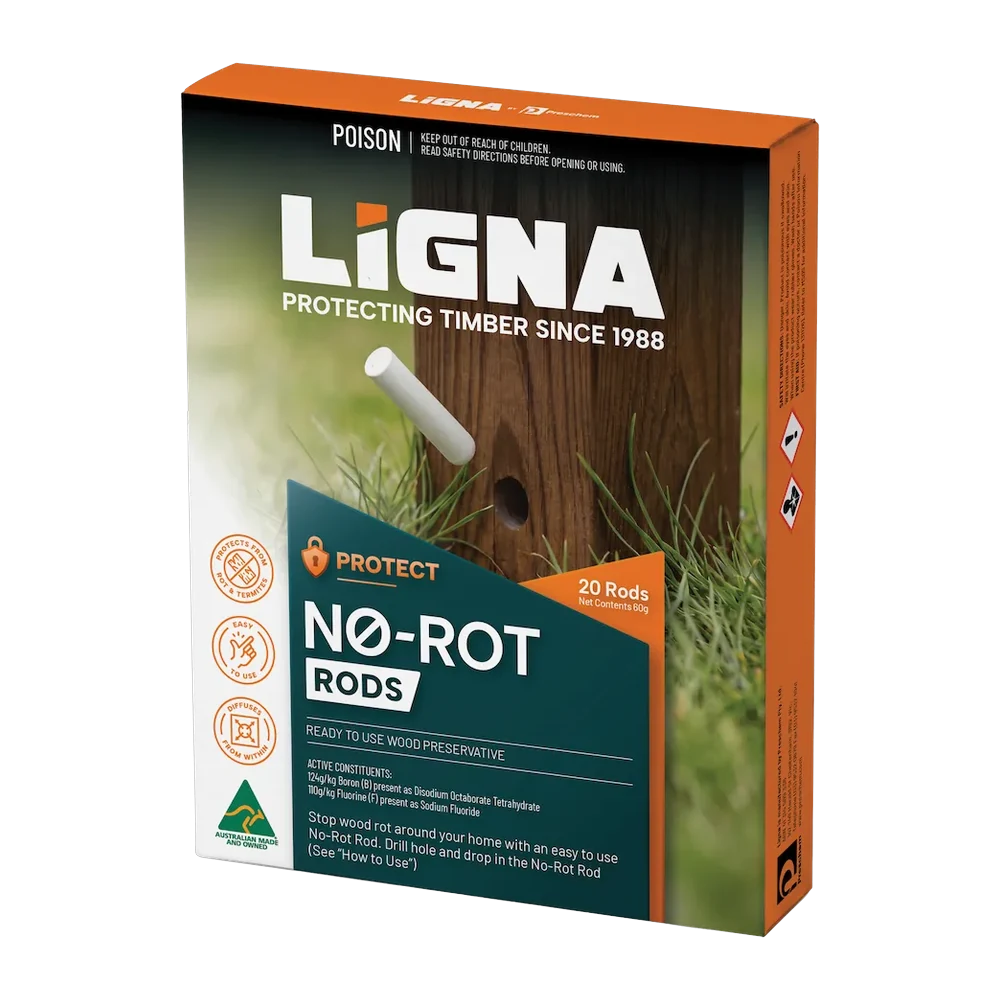
No-Rot Rods
The 8 mm diffusion rod for posts and joinery under 200 mm.
View productAustralian made in Cheltenham, Victoria since 1988 — founded by two CSIRO timber scientists. The whole story →