

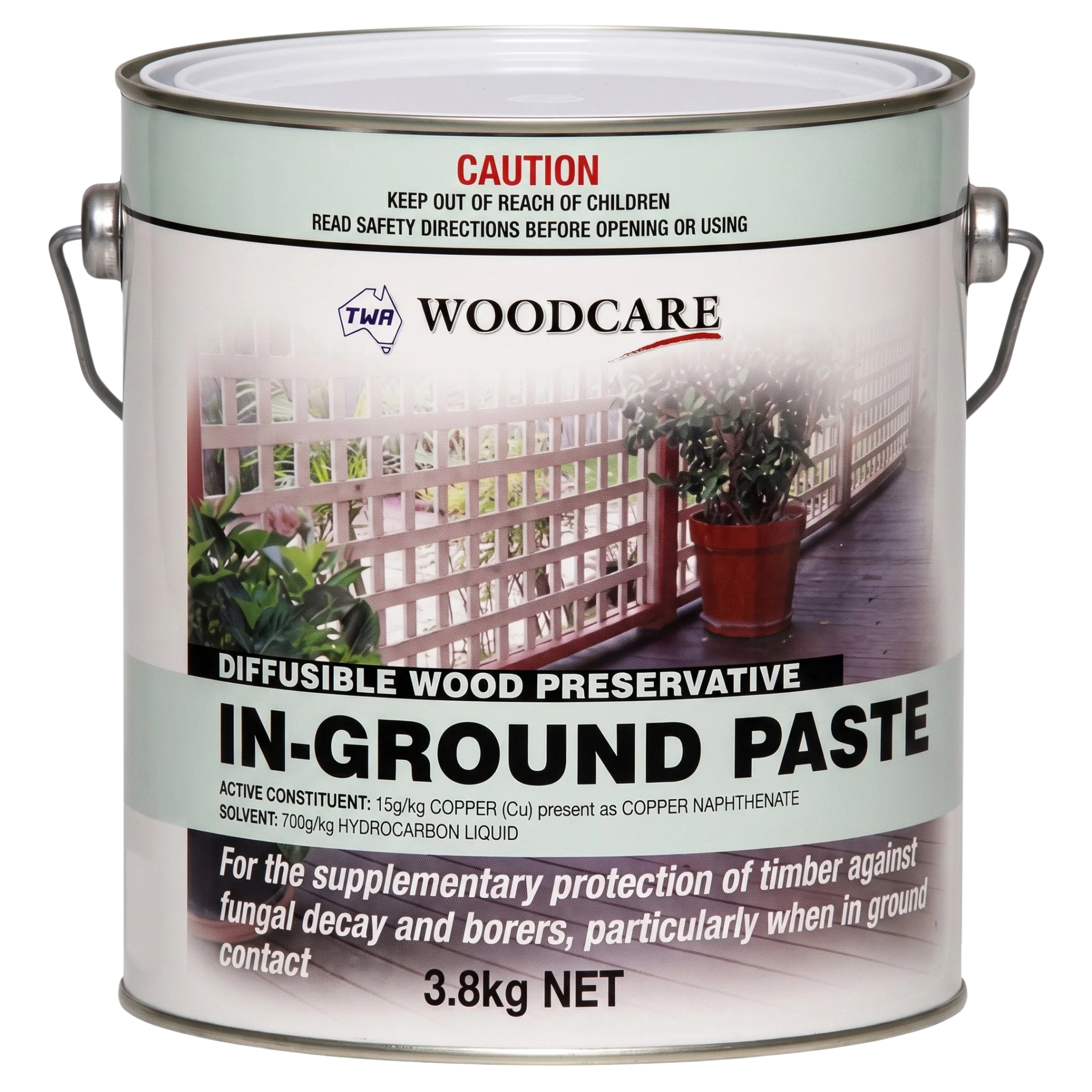
In-Ground Paste
A high-strength preservative paste for timber in ground contact — posts, poles and stumps at the groundline, the zone that rots first.
- For ground contact
- Trowel, brush or pump
- Bandage over it
- Field-tested 10+ years
- Darkens the timber
Where to get it
Find a stockist Safety Data Sheet Australian made in Cheltenham, Victoria — since 1988
Not sure it's the right product?
Compare all preservatives → ·
03 9532 0679
Directions for use
Preparing the timber, then applying — as per the approved label
Before you start: if the timber is structural or load-bearing — veranda posts, bearers, joists, rafters — get a qualified professional to decide whether it can be treated or needs replacing. Preservative stops decay spreading; it can't restore lost strength.
Before you apply
- DIG Expose the groundline For an existing post, dig around the base to expose the band just above and below the soil line — that's the zone that needs treating.
- CLEAN Remove soil & decayed wood Clear soil and debris off the timber, and scrape back any soft, decayed surface to sound wood before applying. For ground contact, remove all non-pressure-treated sapwood.
Applying the paste
Always read the label before use.
- APPLY Trowel or brush on the groundline Apply by trowel, heavy brush, cartridge or mechanical pump. For pole groundline treatment, apply an even coat at least 6 mm thick — from roughly 450 mm below ground to 1100 mm above ground. End grain and pile tops: up to 6 mm; timber joints: up to 3 mm before joining.
- WRAP Bandage over the paste For groundline work, wrap a wax- or plastic-coated paper (or light plastic) bandage around the pole over the paste. This maximises absorption into the pole and significantly enhances performance.
- SET Let it skin and absorb On exposure to air the emulsion darkens and forms a skin within hours; the oil keeps absorbing along the grain. Treated timber turns dark brown to black. Absorption may take up to two weeks out of ground contact.
Application rate
Groundline coat thickness and band.
| Where | Thickness |
|---|---|
| Pole groundline — 450 mm below to 1100 mm above ground | ≥ 6 mm |
| End grain and pile tops | up to 6 mm |
| Timber joints, before joining | up to 3 mm |
Ready to use — stir before applying. Clean up with warm water and detergent.
CAUTION · As per the approved label
Safety & hazards
Signal word, restraints and first aid — from the approved label
As per the approved label. Always read the label before use.
May irritate eyes and skin.
Wear oil-resistant gloves. Excessive contact can cause dryness and mild skin irritation. Use eye protection when working overhead or with pressurised application. Wash hands with soap and water after use.
First aid
If poisoning occurs, contact a Doctor or Poisons Information Centre (13 11 26). If swallowed, do NOT induce vomiting — rinse mouth and give a glass of water.
Full safety directions and first aid are on the product label and the Safety Data Sheet.
Handling & environment
Preschem handling guidance — general advice, not label text. The approved label and the Safety Data Sheet take precedence.
Flammability
Combustible (flash point 180 °C). Avoid heat, sparks and open flame.
Environment
Avoid contaminating waterways and sewers — the product forms an oil pollution hazard.
Staining
Will stain clothing and animal hair (e.g. wool).
Where it goes
At and below the groundline, and on cut surfaces
Wherever timber meets the soil, or where a cut or bolthole exposes untreated wood to moisture. Apply to the groundline zone — roughly the band from just above the soil to just below it.
Built to stay put at the groundline
Why it works
In-Ground Paste carries the highest copper load in the range, in a paraffin base that clings to the timber surface rather than draining away — so the protection stays where you put it, at the wet soil-line where decay is worst.
Highest copper load
A concentrated copper naphthenate paste — far stronger than the brush-on preservatives, because the groundline is the hardest-working zone on any post.
Clings where it's put
The paraffin base means it stays on the surface as a reservoir and keeps protecting for over a decade in ground contact, rather than being washed away by soil moisture.
Made for ground contact
The one product in the range for timber that meets the soil — where every above-ground preservative stops.
Technical data
Specifications
Active constituents
Rate, coverage & reapplication
Pack sizes
Poison schedule
APVMA registration
Storage & shelf life
Common questions
How long does it last?
What's the bandage for?
Can I use it on new posts?
How do I clean up?
You might also need
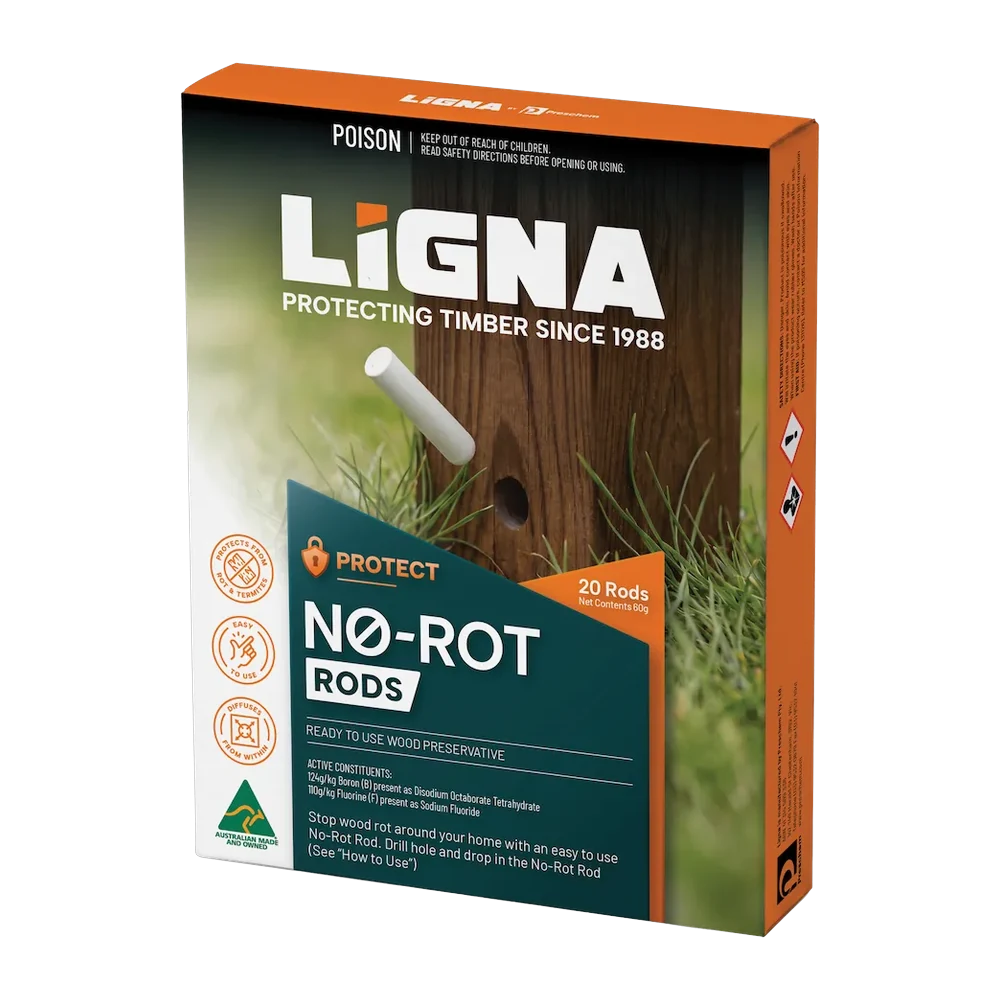
No-Rot Rods
For decay inside a post you can't dig out — drill in and the boron diffuses through the timber. The can't-reach companion to a groundline paste.
View product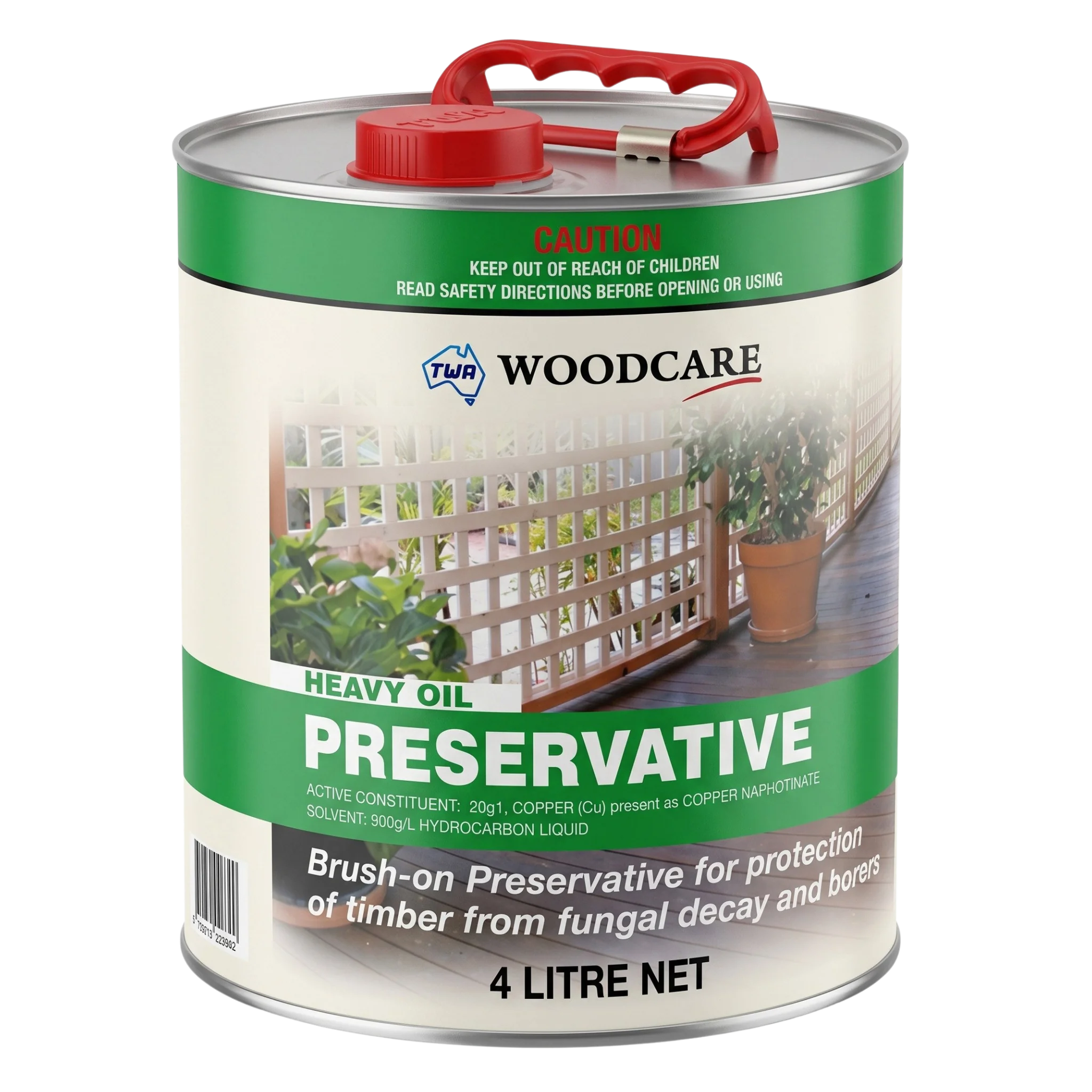
Heavy Oil Preservative
For the above-ground part of the same post — heavy-duty copper protection for weather-exposed timber.
View productPolesaver Rods
For standing poles — groundline decay control from inside, and heavy-duty rods for large-section posts.
View productAustralian made in Cheltenham, Victoria since 1988 — founded by two CSIRO timber scientists. The whole story →