

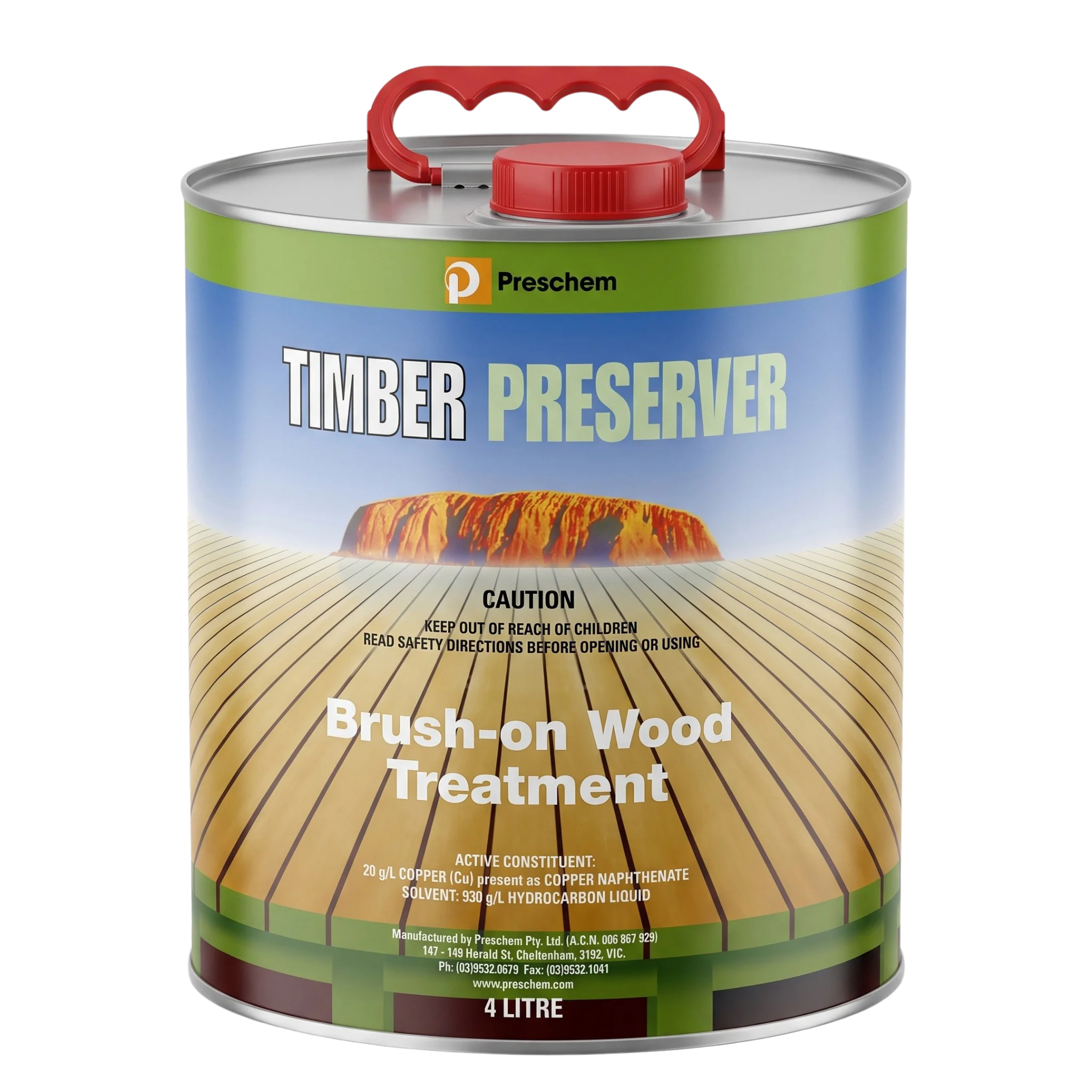
Timber Preserver
The everyday copper preservative for above-ground exterior timber. A lighter oil that absorbs into the wood, protects against decay and borers, and weathers to a natural brown.
- Above ground
- Soaks into the wood
- Brush or roller
- Two flood coats
- Weathers to brown
- No water-based paint
Where to get it
Find a stockist Australian made in Cheltenham, Victoria — since 1988
Not sure it's the right product?
Compare all preservatives → ·
03 9532 0679
Directions for use
Preparing the timber, then applying — as per the approved label
Before you start: if the timber is structural or load-bearing — veranda posts, bearers, joists, rafters — get a qualified professional to decide whether it can be treated or needs replacing. Preservative stops decay spreading; it can't restore lost strength.
Before you brush
- DIG Remove decayed timber first For remedial treatment it's essential to remove all decayed timber from the surface before applying Timber Preserver — a preservative protects sound wood, it doesn't rebuild it.
- CLEAN Clean weathered timber On decks and weatherboards, use a wood cleaner to remove the grey from the surface before treating.
Applying the preservative
Always read the label before use.
- BRUSH Flood on two coats Apply liberally by brush or roller to the areas needing protection — especially end grain and exposed joints. Best results come from two flood coats.
- TIME Allow absorption between coats In cooler conditions the oil takes longer to absorb, so allow more time between coats.
- COAT Overcoat with oil-based paint only Water-based paints are not recommended over Timber Preserver; oil-based paints can work in some situations. Or leave it to weather naturally.
Application rate
Per coat, on prepared timber.
| Rate | Coverage |
|---|---|
| 1 litre per coat | 6–8 m² |
Two flood coats. Protection period about 2–3 years. Clean brushes with mineral turpentine.
CAUTION · As per the approved label
Safety & hazards
Signal word, restraints and first aid — from the approved label
As per the approved label. Always read the label before use.
May irritate the eyes and skin.
May irritate the eyes and skin. Avoid contact with eyes and skin. Wash hands after use.
First aid
If poisoning occurs, contact a Doctor or Poisons Information Centre (13 11 26). If swallowed, do NOT induce vomiting — give a glass of water.
Full safety directions and first aid are on the product label and the Safety Data Sheet.
Handling & environment
Preschem handling guidance — general advice, not label text. The approved label and the Safety Data Sheet take precedence.
Disposal
Triple- or preferably pressure-rinse containers before disposal. Dispose of rinsings in a disposal pit set up for the purpose, clear of waterways, vegetation and tree roots.
Where it goes
Above-ground exterior timber, especially the parts that trap moisture
For hardwood and softwood in above-ground situations — particularly end grain, joints and surfaces with restricted ventilation, where decay starts. Recommended especially for deck subframes.
The everyday copper preservative
Why it works
Timber Preserver carries copper naphthenate — a long-established wood preservative — in a lighter oil that soaks into the timber rather than sitting on the surface. Straightforward decay and borer protection for general above-ground work.
Decay & borer protection
Protects above-ground timber against the fungal decay that exposure and damp cause, and helps guard against some species of woodborer.
Soaks in, general-purpose
The lighter carrier absorbs into the wood — the everyday choice for decks, fences and landscape timber, at a step down in cost from the heavy-duty option.
A natural weathered look
Goes on dark green and weathers to a subtle brown — a more natural look than paint, and it can be left uncoated.
Technical data
Specifications
Rate, coverage & reapplication
Poison schedule
Storage & shelf life
Common questions
How is this different from Heavy Oil Preservative?
Will it change the timber's colour?
Can I paint over it?
How often should I reapply it?
You might also need
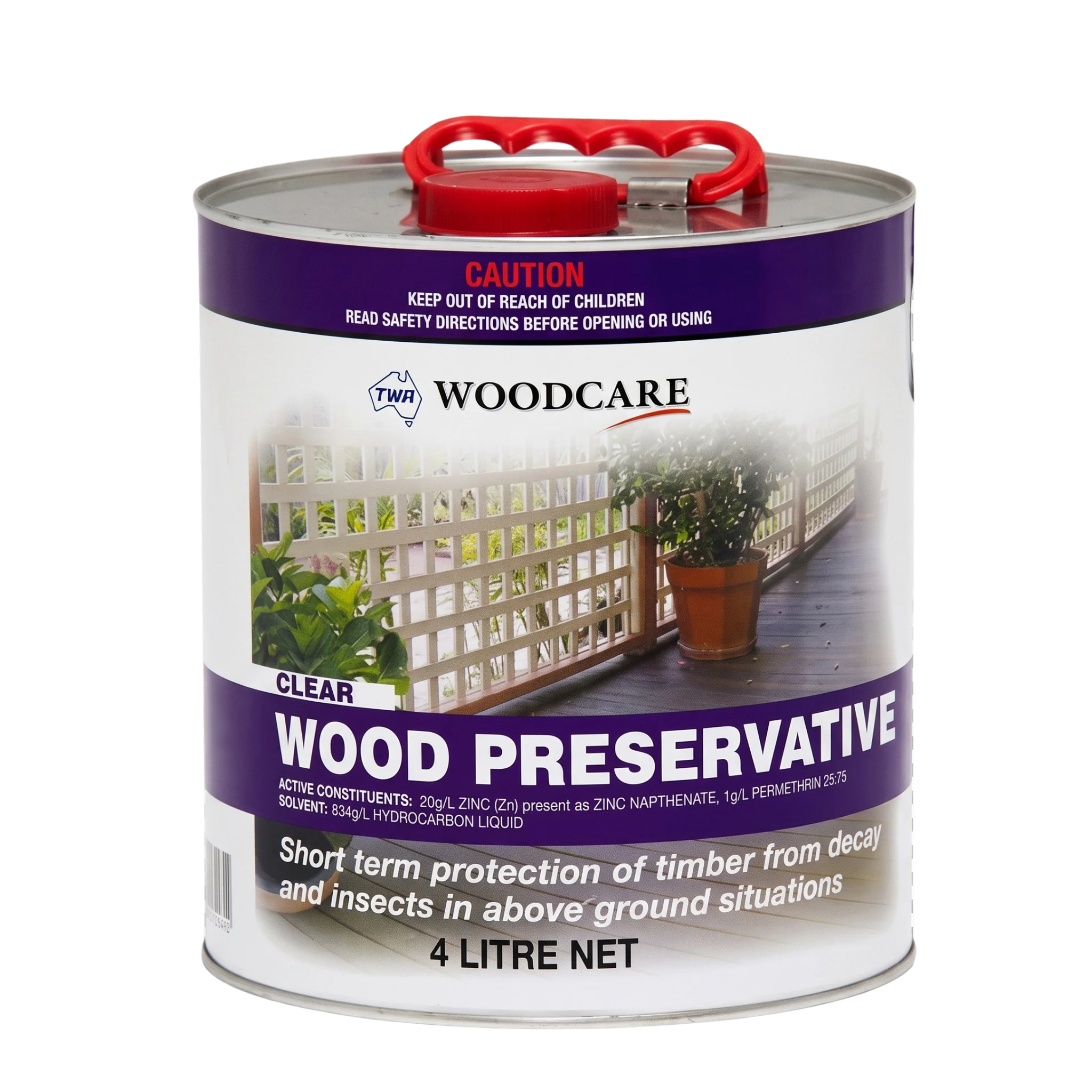
Clear Wood Preservative
The clear alternative — no green tint. Zinc-based, and the go-to for borer in sealed or visible timber.
View product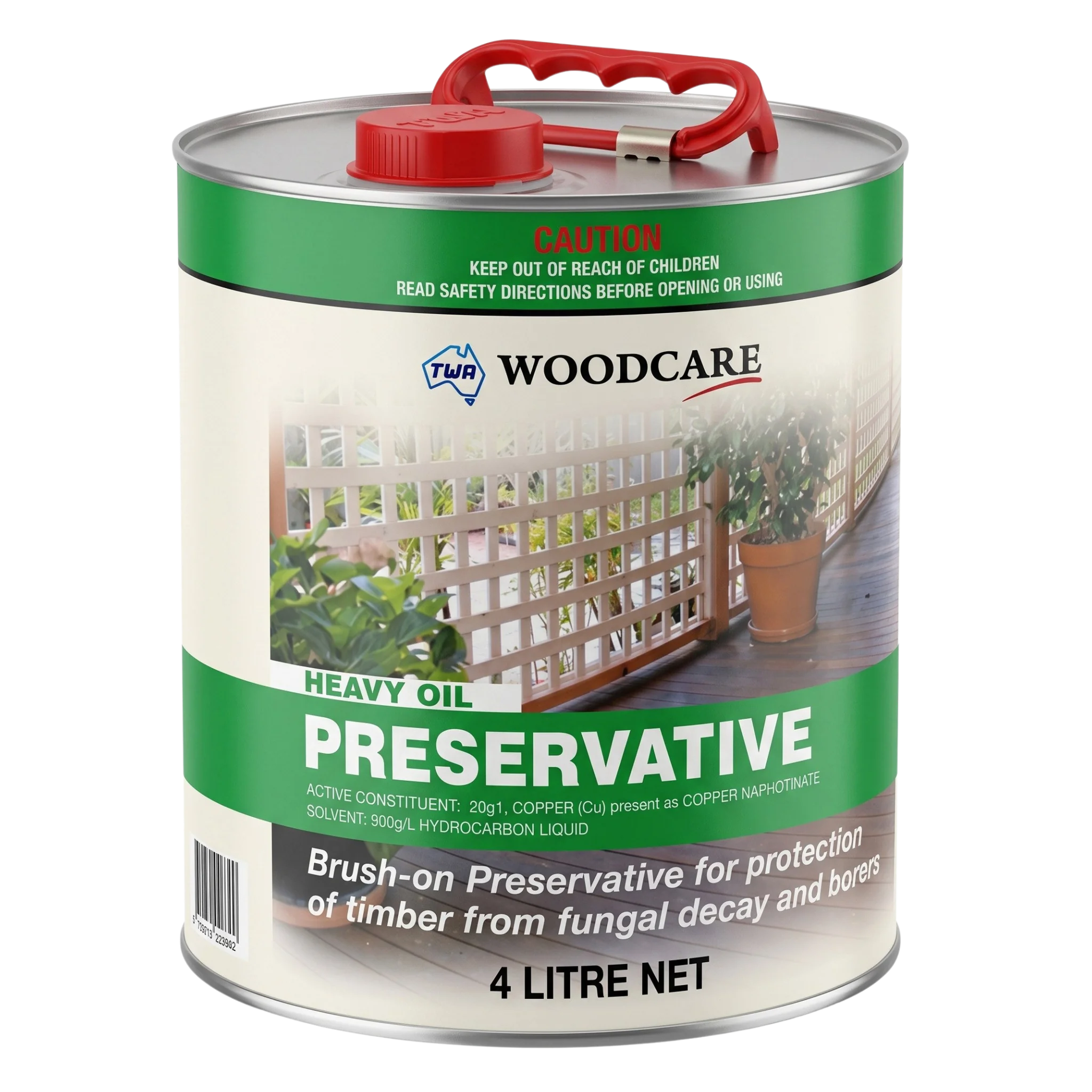
Heavy Oil Preservative
The heavy-duty version — same copper protection in a heavier oil that stays on the surface. More waterproof and longer-lasting, for trade and structural work.
View product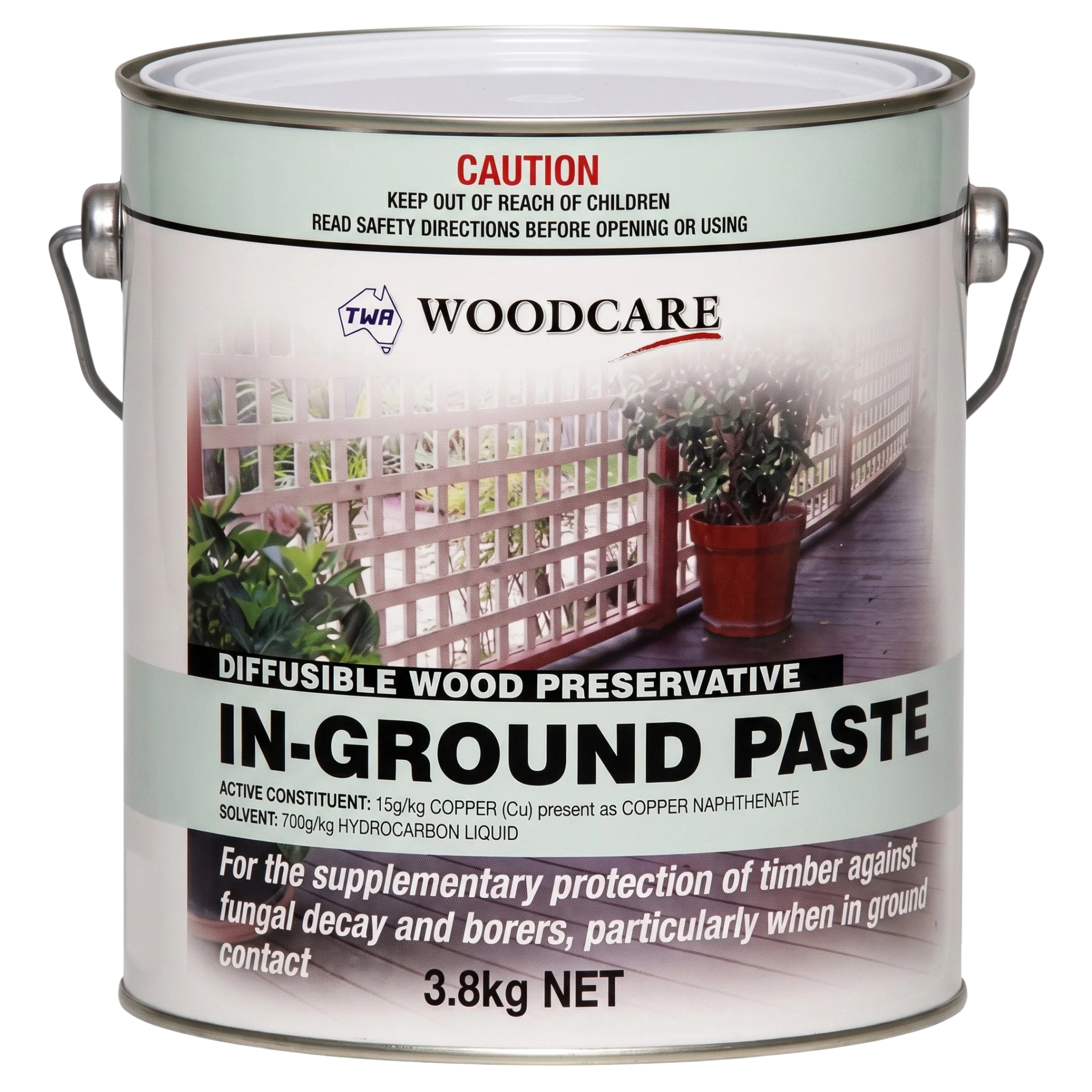
In-Ground Paste
For the groundline — high-strength copper paste where timber meets the soil.
View productAustralian made in Cheltenham, Victoria since 1988 — founded by two CSIRO timber scientists. The whole story →