

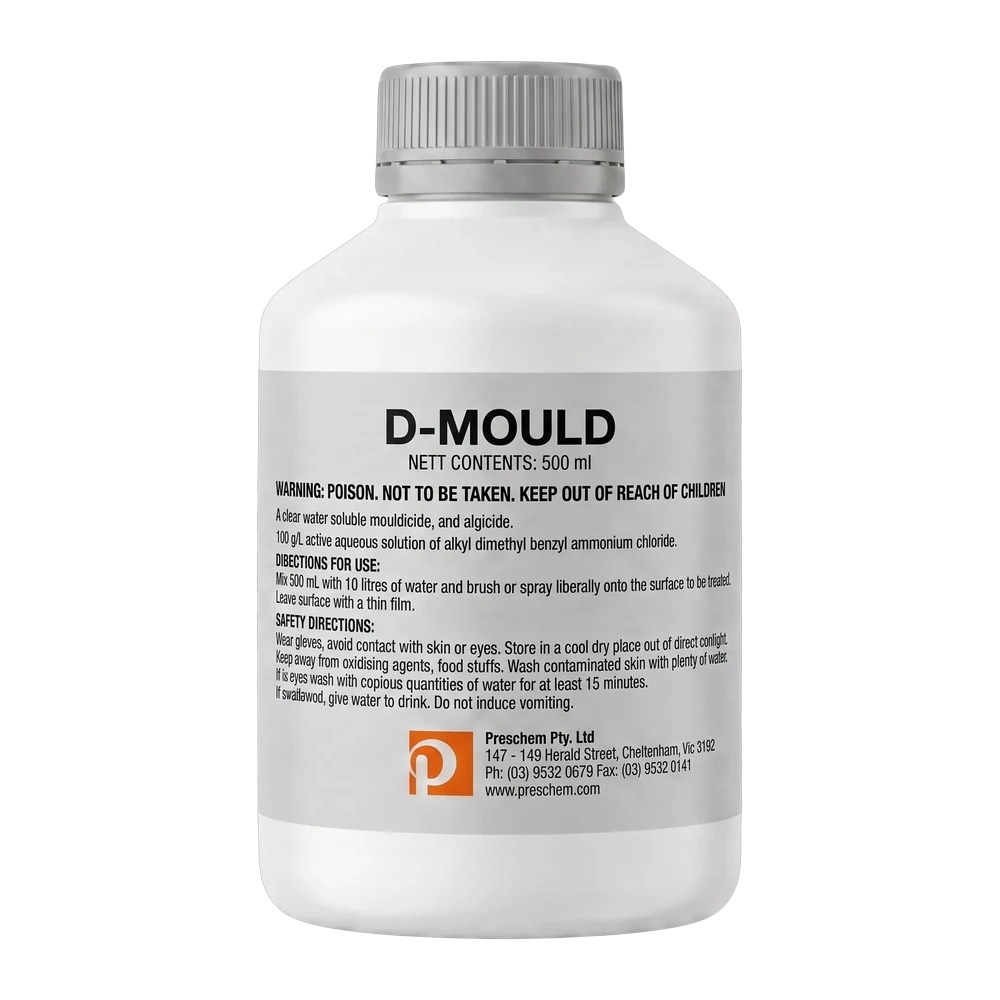
D-Mould
A water-based mouldicide and algaecide for exterior surfaces. Dilute, brush or spray it on, scrub — it kills the mould and algae, and weathering lifts the discolouration.
- Mould & algae
- Timber, masonry & paving
- Dilute 1 : 20
- Brush, spray or mop
- Water-based
- Test a small area first
Where to get it
Find a stockist Australian made in Cheltenham, Victoria — since 1988
Need advice?
03 9532 0679
Directions for use
Preparing the timber, then applying
Before you start
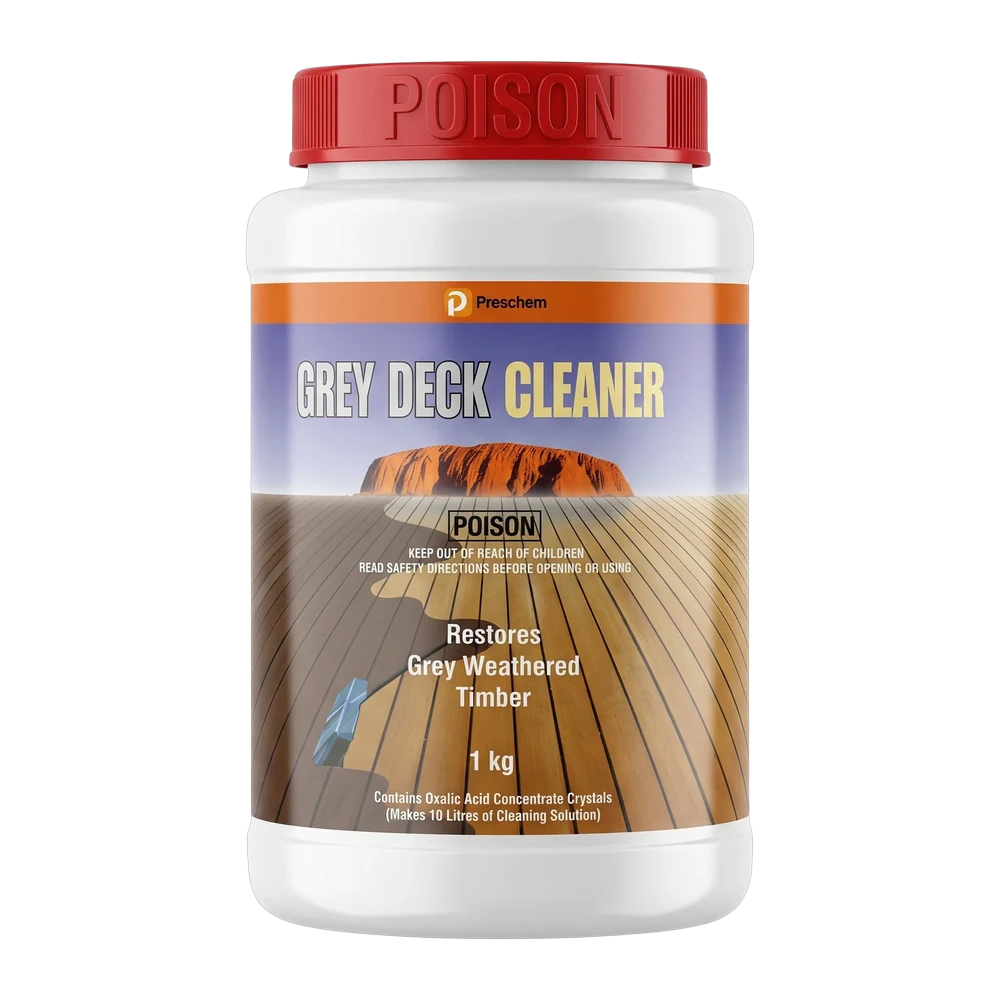
- SCRUB Lift heavy staining first Scrubbing a badly discoloured surface with household bleach or oxalic acid will clean it instantly. D-Mould then deals with the organism underneath.
- RINSE Rinse and let it dry Rinse the bleached area with plenty of clean water and allow it to dry before treating.
- TEST Test a patch On paintwork or a finished surface, try a small hidden area first.
Applying D-Mould
Read the pack directions before use.
- MIX Mix the concentrate Mix the 500 mL of D-Mould concentrate into 10 litres of water.
- APPLY Apply generously Brush, roll, spray or mop a generous application onto the surface to be treated.
- SCRUB Scrub the growth Scrub the mould- or algae-affected surface with a nylon brush or a stiff broom.
- WAIT Leave it to work Once applied, D-Mould kills any existing mould and natural weathering removes the discolouration over a period of time.
Application rate
Coverage and re-treatment.
| Item | Rate |
|---|---|
| Dilution | 500 mL concentrate to 10 L water |
| Coverage | 5–10 m² per litre, by surface porosity |
| Heavily infested surfaces | Re-treat 3–6 months after the first application |
| Prevention | Re-apply every 1–2 years |
Safety & hazards
Safety directions and first aid
Avoid skin contact by wearing protective clothing. Don't breathe vapour or spray mist.
First aid
If poisoning occurs, contact a doctor or Poisons Information Centre (13 11 26). Eyes: hold eyes open, flood with water for at least 15 minutes and see a doctor. Skin: remove contaminated clothing and wash skin thoroughly with soapy water. Inhalation: remove to fresh air. If swallowed: do not induce vomiting — rinse mouth, give milk, gelatin solution or egg white if available, and transport to hospital immediately.
Full safety directions and first aid are on the pack and the Safety Data Sheet.
Where it goes
Wherever mould or algae has taken hold
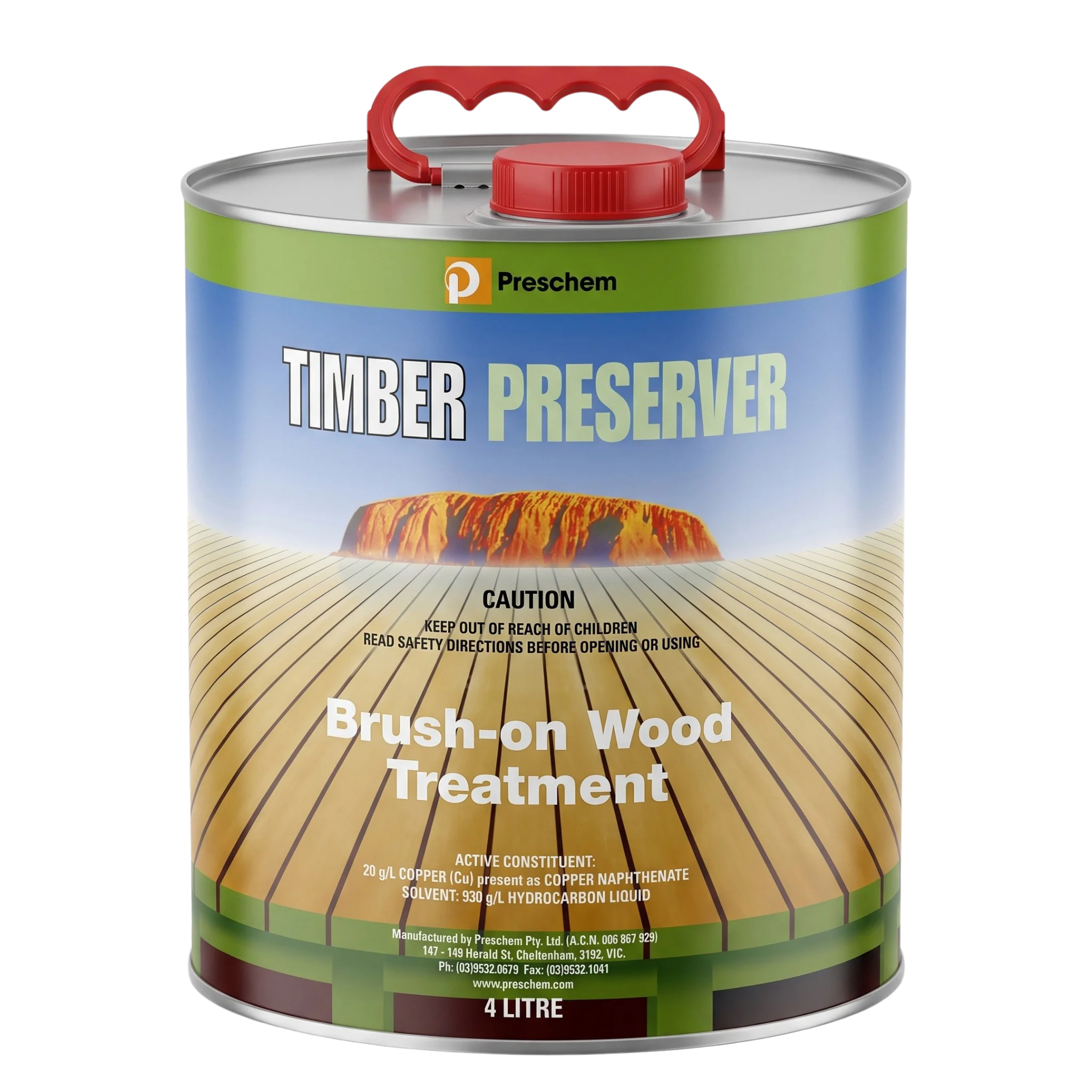
D-Mould is for the problem that looks like rot but isn't: green, black or grey growth on a damp, shaded surface. If the timber is soft and crumbling, that's decay — see the preservatives.
Kills the growth, not just the stain
Why it works
Bleach strips the colour and leaves the organism. D-Mould is a mouldicide — it kills the mould and algae on and just under the surface, so the growth doesn't simply come back the next damp season.
A mouldicide and algaecide
The active, benzalkonium chloride, kills existing mould and algae. Natural weathering then removes the discolouration over time.
Concentrate — dilute it
One 500 mL jar makes 10 litres of solution, at 5–10 m² per litre depending on how porous the surface is.
Works on most exterior surfaces
Timber (Western Red Cedar especially), decks, paving, brickwork, tiles, painted surfaces, synthetic grass and canvas.
Technical data
Specifications
Active constituents
Protects against
Rate, coverage & reapplication
Pack sizes
Common questions
Is it rot, or is it mould?
Do I have to rinse it off?
Will it damage paint or a finish?
How often will I need to do it again?
You might also need
Australian made in Cheltenham, Victoria since 1988 — founded by two CSIRO timber scientists. The whole story →