

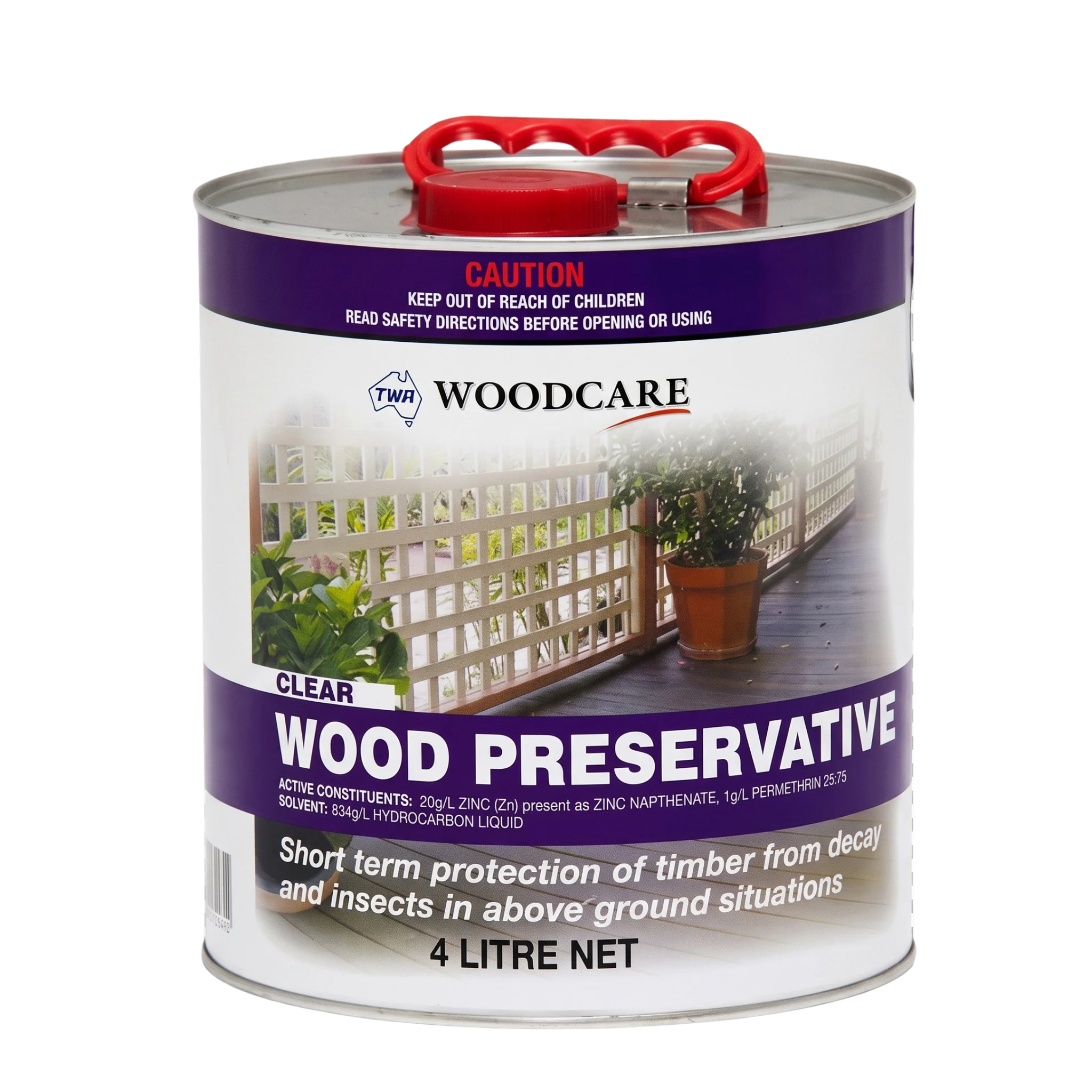
Clear Wood Preservative
Clear penetrating preservative for above-ground timber — protects against borers, termites and fungal decay without a green tint. Paint over it once it's dry.
- Above ground
- Stays clear
- Borer, termite & decay
- Brush, inject or dip
- Paintable
- Dry timber only
Where to get it
Find a stockist Australian made in Cheltenham, Victoria — since 1988
Not sure it's the right product?
Compare all preservatives → ·
03 9532 0679
Directions for use
Preparing the timber, then applying — as per the approved label
Before you start: if the timber is structural or load-bearing — veranda posts, bearers, joists, rafters — get a qualified professional to decide whether it can be treated or needs replacing. Preservative stops decay spreading; it can't restore lost strength.
Before you brush
- STRIP Bare timber only If the timber has been painted or varnished, remove the old coating first — Clear Wood penetrates the wood, so it can't get in through a finish.
- DRY Make sure it's dry The product works best on dry timber. Wet timber repels it and the treatment won't be effective.
- CUT Do the cutting first All cutting, drilling, moulding and planing should be done before treatment, and components treated before joining or fixing.
Applying the preservative
Always read the label before use.
- BRUSH Flood-brush, inject or dip Apply by flood brushing, direct injection into affected areas, or a one-to-two-minute total dip. Spraying is not recommended.
- TIME One coat, often enough One coat may be sufficient in most cases. If a second is needed, allow at least 24 hours between coats. Touch dry within about 2 hours.
- COAT Overcoat, if you want Oil-based paints, primers and stains after 3 days (fine weather) or a week in cool weather. For acrylics, prime with an oil-based primer first.
Application rate
Coverage per coat.
| Rate | Coverage |
|---|---|
| 1 litre per coat | 4–8 m² |
Rate varies with timber species, moisture content and surface condition. Reapply every 6–12 months if exposed and unpainted; longer if coated over. Clean up with mineral turpentine.
CAUTION · As per the approved label
Safety & hazards
Signal word, restraints and first aid — from the approved label
As per the approved label. Always read the label before use.
May irritate eyes and skin. Toxic to bees.
May irritate the eyes and skin. Avoid contact with eyes and skin. Wash hands after use.
First aid
If poisoning occurs, contact a Doctor or Poisons Information Centre (13 11 26). If swallowed, do NOT induce vomiting — give a glass of water.
Full safety directions and first aid are on the product label and the Safety Data Sheet.
Handling & environment
Preschem handling guidance — general advice, not label text. The approved label and the Safety Data Sheet take precedence.
Handling
Use impervious (PVC) gloves and sensible work clothing; avoid breathing mist or vapour; wear eye protection when working overhead or where splashing may occur. Ensure adequate ventilation, especially in enclosed spaces. Over-exposure to solvent vapour may cause dizziness, nausea or headaches — if these occur, cease work and move to fresh air. Wash hands and face with soap and water after use.
Flammability
Flammable liquid (UN 1306, low flash point). Do not smoke or use near open flame. Store with the lid firmly closed, away from heat, out of reach of children.
Environment
Toxic to fish and to bees. Do not use where drips or spillage could contaminate ponds, streams or waterways. Do not use to treat beehive boxes.
Disposal
Do not pour down drains or into waterways. Absorb excess onto sawdust or waste wood and bury. Crush empty containers and dispose of per local regulations.
Where it goes
Above-ground timber you want protected but not coloured
For above-ground timber and structures — anywhere you need insect and decay protection but can't have a green tint, and the timber is dry. Best applied before the timber is joined or fixed.
Protection without the colour
Why it works
Where the copper preservatives leave a green tint, Clear Wood uses zinc and permethrin instead — so it protects timber against insects and decay while staying essentially clear. It penetrates into the wood rather than sitting on top as a coating.
Stays clear
Zinc-based, not copper — so no green stain. It may slightly darken some timbers, but there's no colour to work around.
Borer, termite & decay
Listed against auger, powder-post and furniture beetles, drywood and subterranean termites, and fungal decay in above-ground timber.
Penetrates, then paints over
Soaks into the timber rather than coating it. Once dry it takes oil-based paints, primers and stains — acrylics over an oil-based primer.
Technical data
Specifications
Active constituents
Protects against
Rate, coverage & reapplication
Pack sizes
Poison schedule
APVMA registration
Storage & shelf life
Common questions
Will it change the timber's colour?
Will it stop termites?
Can I paint over it?
Is it safe near bees, plants or animals?
How often do I need to reapply it?
You might also need
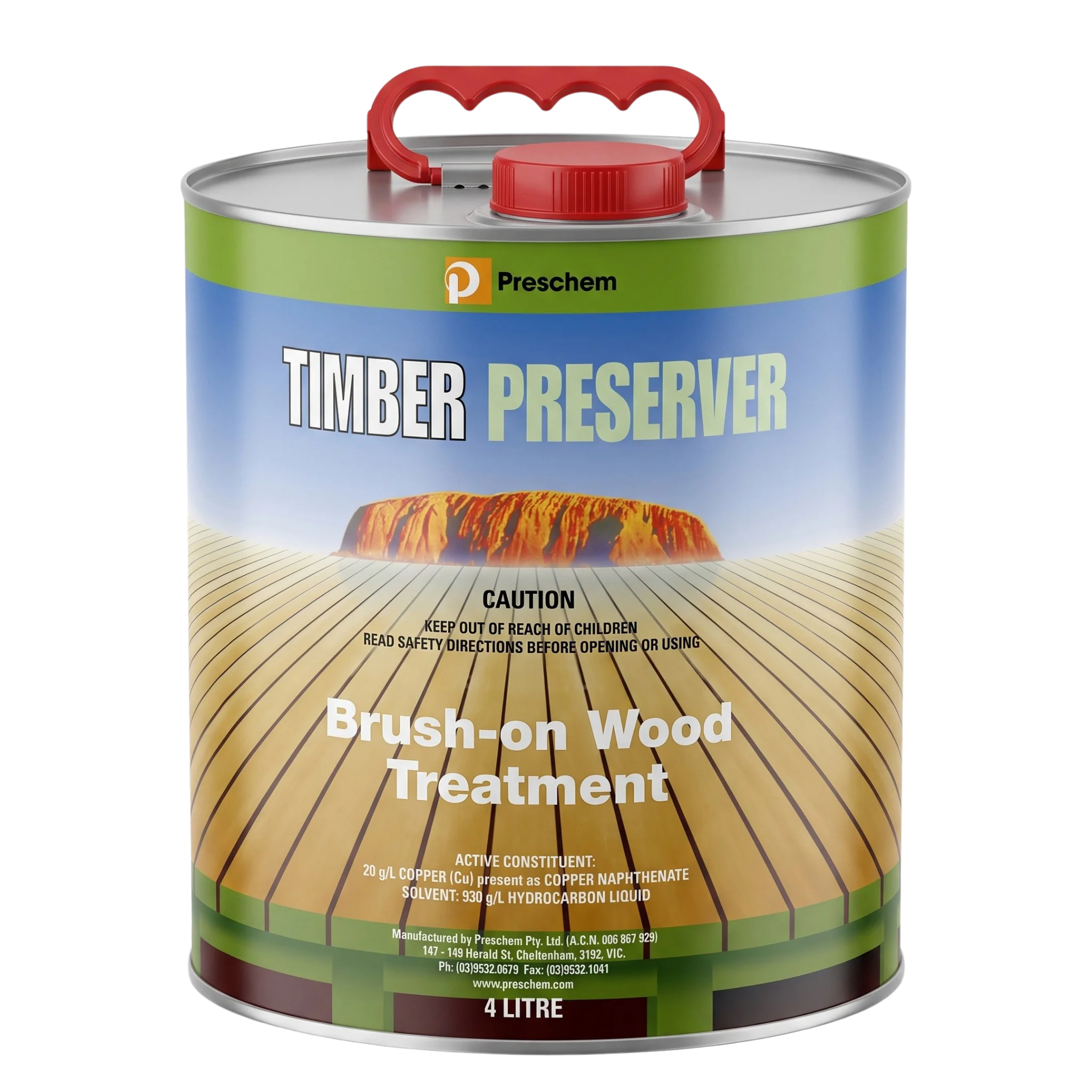
Timber Preserver
The everyday copper alternative — absorbs into the timber and weathers dark green to brown, if a green tint is fine.
View product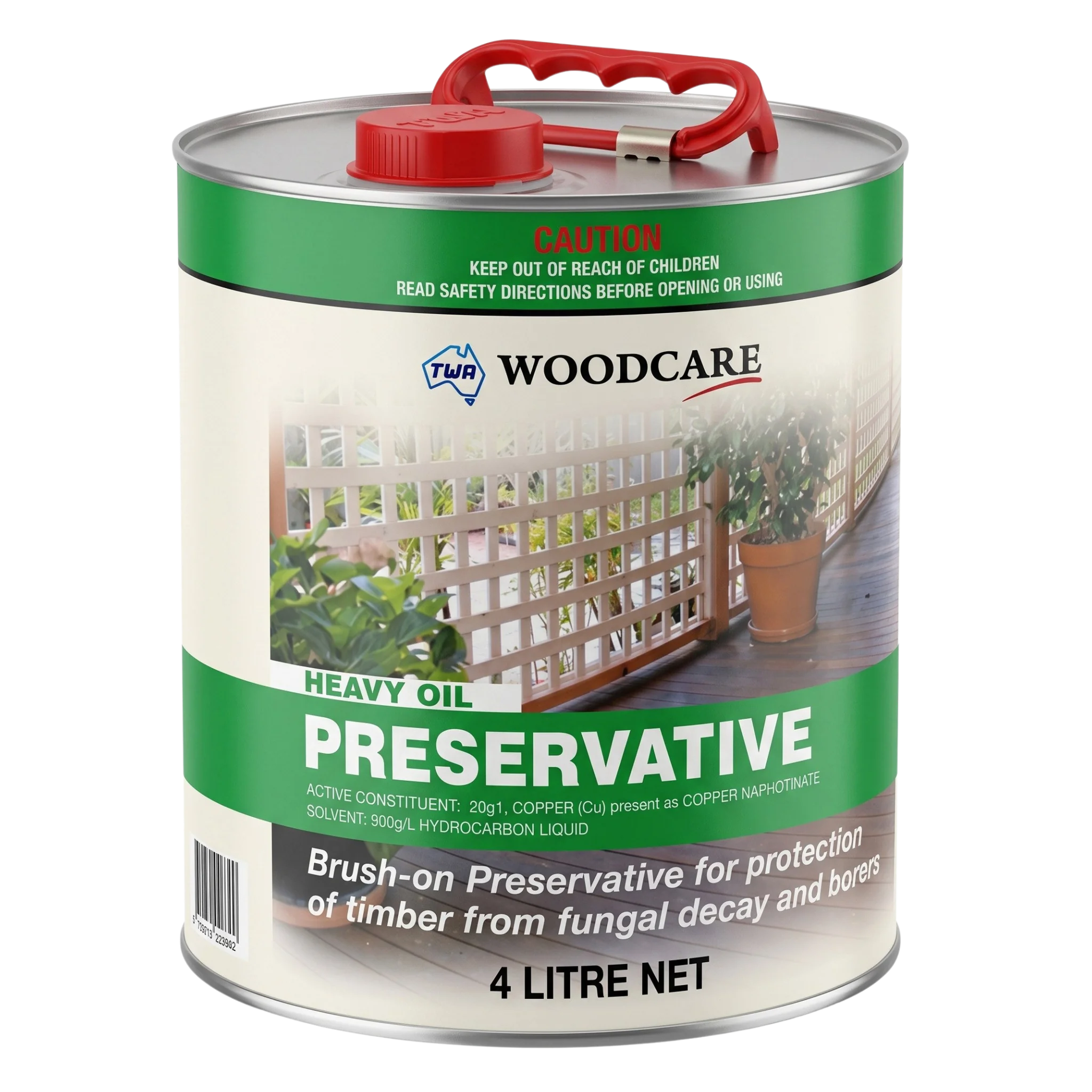
Heavy Oil Preservative
The heavy-duty copper alternative — a heavier oil that stays on the surface, more waterproof and longer-lasting for trade work.
View product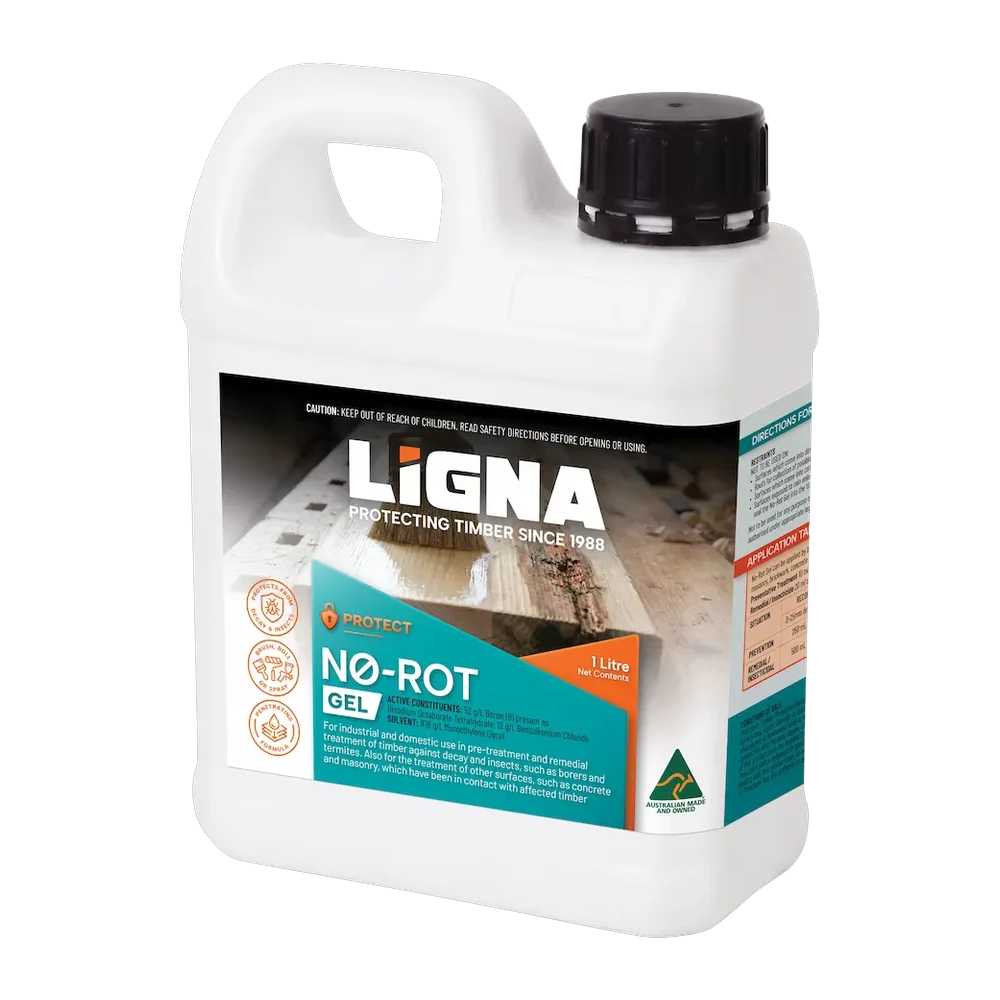
No-Rot Gel
For rot you can already see — a boron gel that works on damp timber and diffuses into the wood.
View productAustralian made in Cheltenham, Victoria since 1988 — founded by two CSIRO timber scientists. The whole story →