

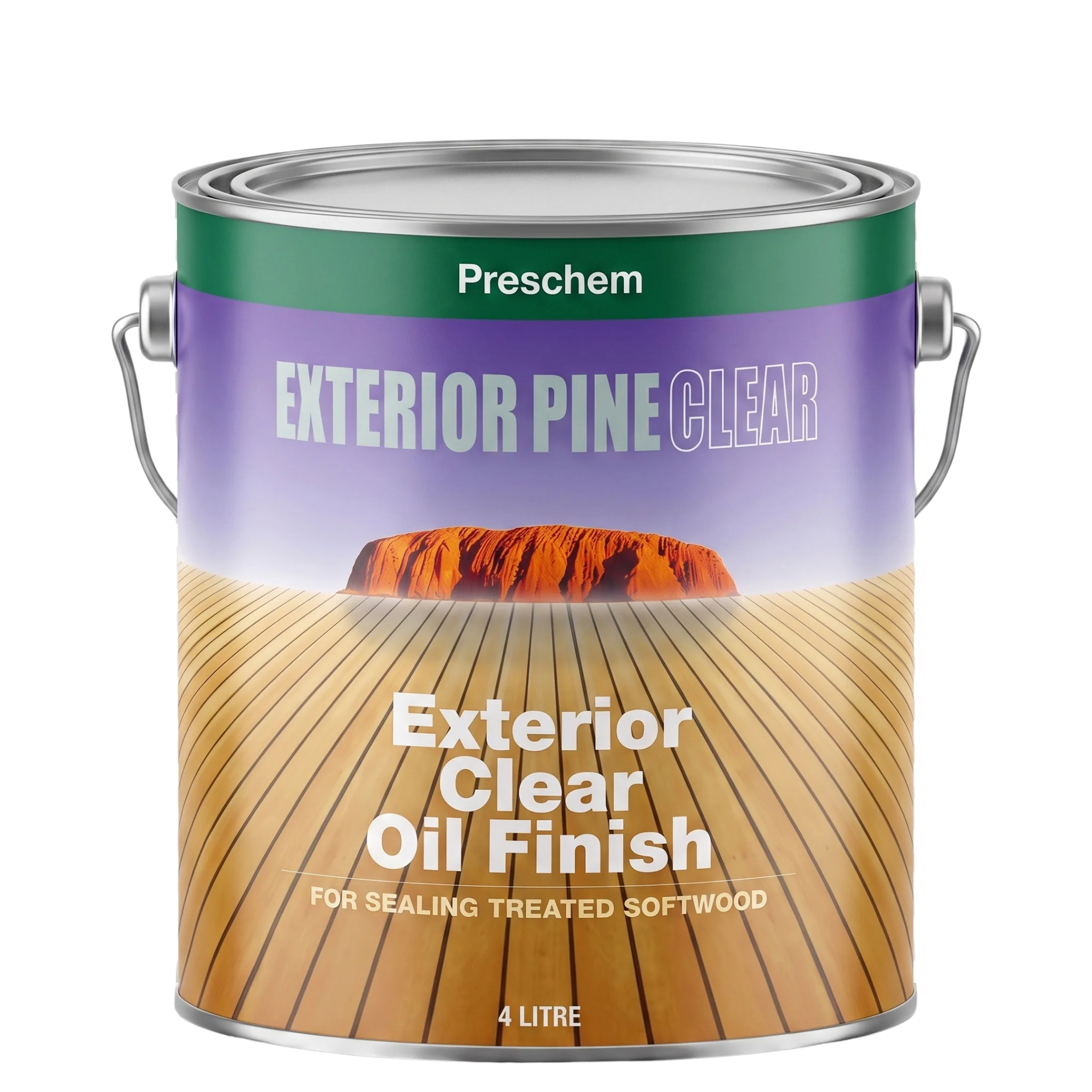
Exterior Pine Clear
The oil for treated pine. Penetrates the porous grain of Radiata and Slash Pine to give it a rich oiled look, stop it blackening, and reduce the checking and movement pine is known for — with no film to peel.
- Treated pine
- No pigment
- Penetrating oil
- Non-film-forming
- Not for hardwoods
Where to get it
Find a stockist Australian made in Cheltenham, Victoria — since 1988
Need advice?
03 9532 0679
Which one do I need?
Match the timber's tone for a natural look, or pick a colour. Same penetrating oil underneath; only the pigment changes.
Directions for use
Preparing the timber, then applying
Before you brush
- CLEAN Start dry and clean Surface must be dry and free of dirt, grease and wax. Previously varnished or painted surfaces must be thoroughly stripped.
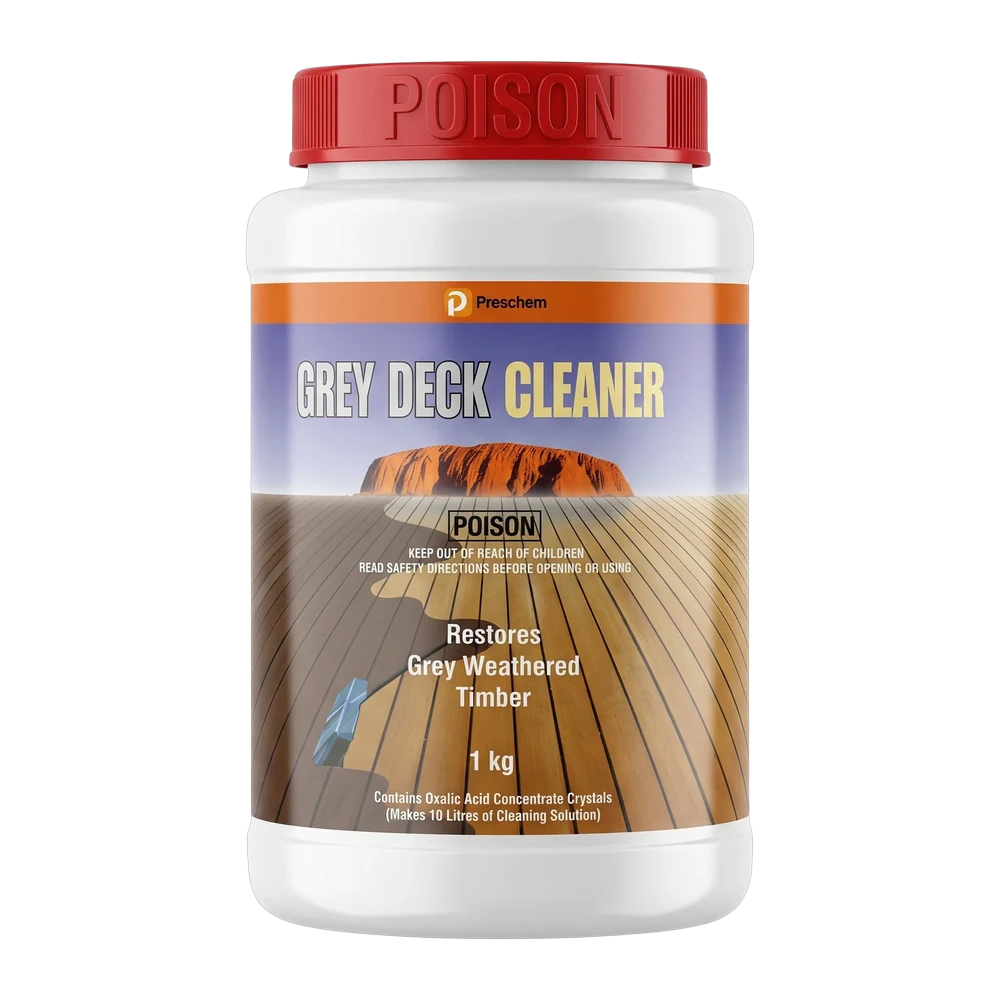
- GREY Deal with weathering Badly weathered surfaces should be sanded back or cleaned with Grey Deck Cleaner before application.
- SKY Watch the weather Do not apply when dew or rain is expected.
Applying the oil
- COAT One generous coat Brush, roller, spray, dip or lambswool applicator. Make sure all end grain is well coated to minimise water absorption.
- DRY Touch-dry in 4–6 hours Fully cured in 24 hours. On decks and other foot-traffic areas, allow a few days before heavy use — the TDS advises three.
- AGAIN Second coat after the first year After the first 12 months of weathering a second application gives a much longer service life. Then re-oil every 12–18 months depending on exposure.
Where it goes
Treated softwood, outdoors
Wherever a clear protective exterior finish is wanted on treated softwood — Radiata Pine, Slash Pine and other CCA, LOSP, ACQ or Tanalised pine: cladding, decking, pergolas, trellis and fencing.
Made for the way pine behaves
Why it works
Treated pine is porous, moves with the weather and goes dry and blotchy. A hardwood oil sits on top of it. Exterior Pine Clear is formulated to get in — and to keep the timber stable once it is there.
Penetrates, doesn't coat
Formulated to dry slowly in service so no film forms. Peeling and cracking are never a problem.
Stops the blackening
Keeps the treated surface clean — the dry, grey-black look of untreated pine doesn't develop when it is maintained.
Stabilises the timber
Water repellents reduce checking and movement, overcoming many of the problems of using pine in service.
Specifications
Specifications
- Timber
- Treated softwood — Radiata and Slash Pine; CCA, LOSP, ACQ, Tanalised
- Finish
- Natural oiled "wet look", no pigment, non-film-forming
- Coverage
- Up to 10 m²/L on dressed timber, 6 m²/L on sawn
- Dry time
- Touch-dry 4–6 hours · cured 24 hours
- Recoat
- Second coat after 12 months, then every 12–18 months by exposure
- Clean-up
- Mineral turpentine
- Made in
- Australia
Common questions
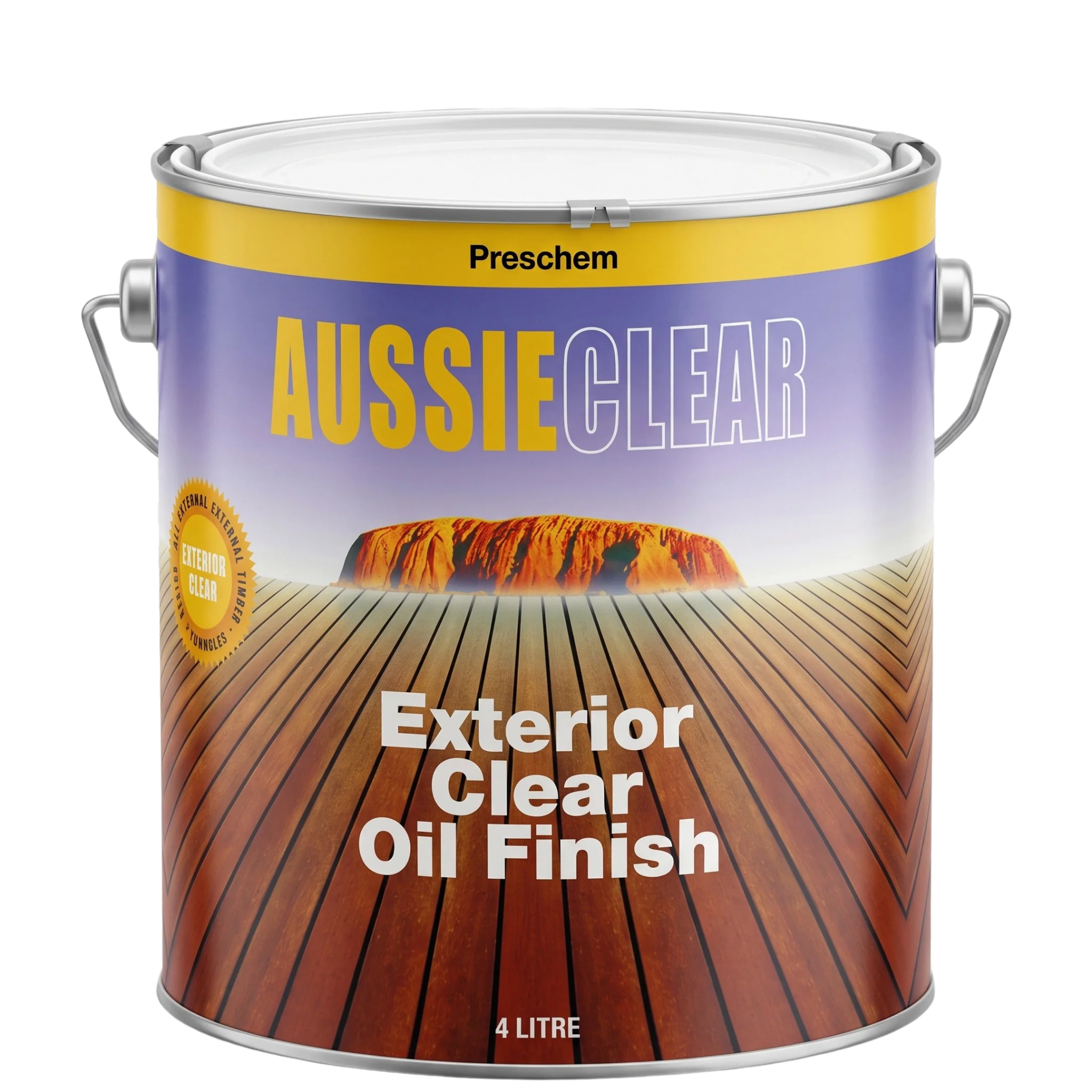
Why not just use Aussie Clear on pine?
Does it add colour?
Will it peel?
How often do I re-oil?
Australian made in Cheltenham, Victoria since 1988 — founded by two CSIRO timber scientists. The whole story →